구례 재료의 산책
Gurye PJ
Location: 구례군 광의면 수월리 / Gurye Suwol-ri
Type: 단독주택, 스테이, 근린생활시설(일반음식점)
Year: 2024.11-2025.12
Floor Area: 104.52m²
Photograph : 전소영 audiovisualunion
Gurye PJ
Location: 구례군 광의면 수월리 / Gurye Suwol-ri
Type: 단독주택, 스테이, 근린생활시설(일반음식점)
Year: 2024.11-2025.12
Floor Area: 104.52m²
Photograph : 전소영 audiovisualunion
도시와는 다른 삶의 방식을 꾸려 나갈 계획에 대한 이야기를
공유하는 것으로 프로젝트를 시작했다. 클라이언트의 거주공간이자 요리를 선보이는 식당, 공연이나 전시 등의 작업이 가능한 여러 프로그램을 위한 공간이 요구되었다. 더해서
찾아온 손님이 머물 숙박공간까지도 계획하고자 했다. 대지는 70년대에
지어진 한옥주택과 마당이 있는 100평의 땅이다. 기존의
오래된 주택을 철거하고 비워진 땅에 신식 건축물을 더하기 보다 이미 자리하던 요소들을 되살려 마을과 어울리는 규모와 형태로 풀어내는 방향이 자연스럽게
떠올랐다. 이는 전에 살던 집의 주인에게 이곳 저곳의 공간과
나무, 물건들에 관한 이야기를 들으며 그 장소에 이미 있던 것들을 섬세한 눈으로 바라볼 수 있었기 때문인
것 같다. 특히 남쪽 풍경을 향해 놓인 철제 2층 구조물에
올라섰을 때 보였던 자연의 풍경이 너무 아름다웠기에, 새로 만들어질 공간에서도 그 시선은 유지되도록
하고자 했다.
결과적으로 기존에 해오던 도시 맥락에서의 작업 방식과는 다르게 접근할 수밖에 없었다. 좁은 땅에 여러 기능을 담으면서도 서로 충돌하지 않게 만들어야 했기 때문에, 공간이 만들어지는 방식 자체부터 고민해야 했다. 특히 도시와 달리 넓은 마당을 갖게 된 클라이언트에게 집의 영역은 대지 전체로 확장되었고, 이를 다양한 용도에 맞게 적절히 활용할 수 있도록 제안하고자 했다. 기존 건축물의 외벽에 공간을 덧붙여 만드는 방식으론 부피만 커지고 외부와의 관계에는 변화를 줄 수 없다고 여겨졌다. 사용방식에 따른 공간들 간의 관계를 고려해 외부공간을 공유하는 별도의 건축물을 배치하기도 하고, 기존의 공간을 막거나 잘라서 새로운 길을 만들고 사방의 외부와 다르게 만날 가능성을 부여하면서 계획안을 마련하였다.
![]()
![]()
![]()
![]()
![]()
![]()
![]()
![]()
![]()
![]()
![]()
![]()
![]()
![]()
The project began through the sharing of ideas around an alternative mode of living, distinct from the conventions of the city. The program embraced a hybrid environment: a private residence for the client, a dining space for presenting culinary work, and a flexible setting capable of accommodating performances and exhibitions. In addition, short-term accommodation for visiting guests was also envisioned.
The site, approximately 300 m² in area, contains a 1970s ‘hanok’. Rather than demolishing the existing house and inserting a new structure on an emptied site, an approach that revives what was already there and articulates it in a scale and form aligned with the village emerged naturally. Conversations with the former occupant—about the spaces, trees, and objects embedded in the site—allowed for a more attentive reading of what was already there. In particular, the view of the surrounding landscape from the two-story steel structure oriented toward the south was strikingly beautiful, and the project sought to preserve this visual axis in the newly created spaces.
As a result, the project required a departure from conventional urban design methodologies. Accommodating multiple programs within a limited footprint, while preventing functional conflicts, necessitated a reconsideration of how space itself is generated. Unlike in the city, the generous yard expanded the notion of the home to encompass the entire site, and the project sought to propose ways to use it appropriately across diverse functions. Simply appending new volumes to the exterior envelope would increase mass without transforming the building’s relationship to its surroundings Instead, considering the relationships between spaces based on their use, separate structures were introduced to share exterior spaces; in some cases, existing spaces were enclosed or cut through to create new paths, allowing for more varied and differentiated connections with the surroundings on all sides.
![]()
![]()
결과적으로 기존에 해오던 도시 맥락에서의 작업 방식과는 다르게 접근할 수밖에 없었다. 좁은 땅에 여러 기능을 담으면서도 서로 충돌하지 않게 만들어야 했기 때문에, 공간이 만들어지는 방식 자체부터 고민해야 했다. 특히 도시와 달리 넓은 마당을 갖게 된 클라이언트에게 집의 영역은 대지 전체로 확장되었고, 이를 다양한 용도에 맞게 적절히 활용할 수 있도록 제안하고자 했다. 기존 건축물의 외벽에 공간을 덧붙여 만드는 방식으론 부피만 커지고 외부와의 관계에는 변화를 줄 수 없다고 여겨졌다. 사용방식에 따른 공간들 간의 관계를 고려해 외부공간을 공유하는 별도의 건축물을 배치하기도 하고, 기존의 공간을 막거나 잘라서 새로운 길을 만들고 사방의 외부와 다르게 만날 가능성을 부여하면서 계획안을 마련하였다.




The project began through the sharing of ideas around an alternative mode of living, distinct from the conventions of the city. The program embraced a hybrid environment: a private residence for the client, a dining space for presenting culinary work, and a flexible setting capable of accommodating performances and exhibitions. In addition, short-term accommodation for visiting guests was also envisioned.
The site, approximately 300 m² in area, contains a 1970s ‘hanok’. Rather than demolishing the existing house and inserting a new structure on an emptied site, an approach that revives what was already there and articulates it in a scale and form aligned with the village emerged naturally. Conversations with the former occupant—about the spaces, trees, and objects embedded in the site—allowed for a more attentive reading of what was already there. In particular, the view of the surrounding landscape from the two-story steel structure oriented toward the south was strikingly beautiful, and the project sought to preserve this visual axis in the newly created spaces.
As a result, the project required a departure from conventional urban design methodologies. Accommodating multiple programs within a limited footprint, while preventing functional conflicts, necessitated a reconsideration of how space itself is generated. Unlike in the city, the generous yard expanded the notion of the home to encompass the entire site, and the project sought to propose ways to use it appropriately across diverse functions. Simply appending new volumes to the exterior envelope would increase mass without transforming the building’s relationship to its surroundings Instead, considering the relationships between spaces based on their use, separate structures were introduced to share exterior spaces; in some cases, existing spaces were enclosed or cut through to create new paths, allowing for more varied and differentiated connections with the surroundings on all sides.


본채
Type: Dining, Hall, Stay
Area: 59.29m²
![]()
![]()
![]()
![]()
Type: Dining, Hall, Stay
Area: 59.29m²


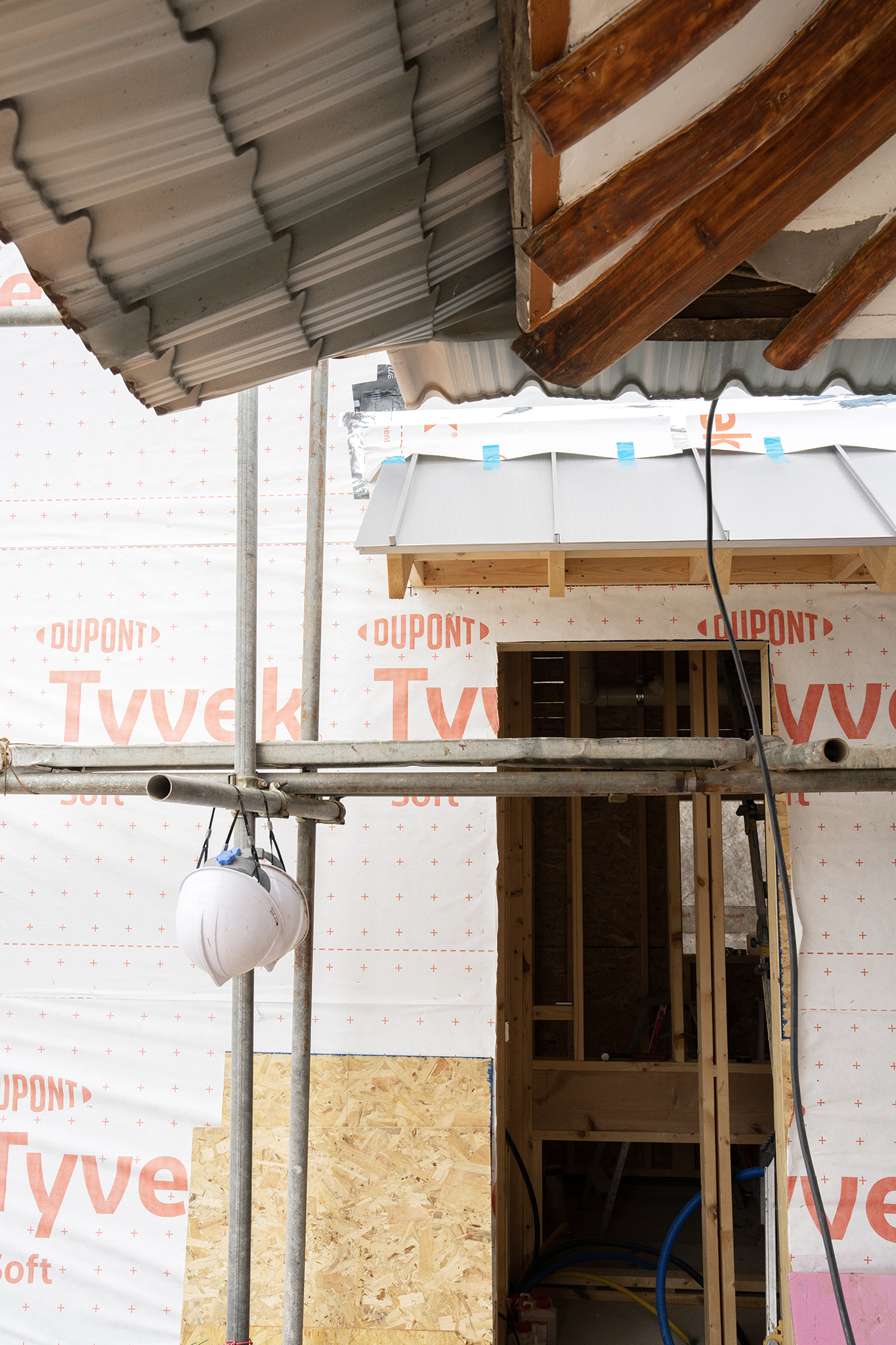
기존 한옥의 구조를 최대한 유지한 채 재해석하였다. 작업실이자 주방, 스테이 공간 등으로 유연하게 활용할 것을 고려하여
가장 공공적인 장소로 계획했다. 메인 홀의 천장을 철거하면서 서까래를 드려내고 중심부의 기둥을 노출시켜
공간의 구심점이자 외부를 향한 활동의 무대로 사용하기를 바랐다. 주방은 클라이언트의 작업방식에 맞추어
새로 제작한 가구들과 기존에 사용하던 가구를 조합했다. 작은방으로 쓰이던 공간은 스테이를 위한 방으로
만들기 위해 새로운 벽을 만들어 별도의 출입구를 만들었고, 벽으로 가로막힌 공간에 공용화장실을 마당방향으로
내었다.
![]()
![]()
![]()
![]()
![]()


The existing ‘hanok’
structure was reinterpreted while preserving its original framework. Programed
as a workshop, kitchen, and stay room, it’s conceived as the most public space within the project. By removing the ceiling of the main hall, the rafters were
exposed, and the central column establishing a spatial anchor that also
operates as a stage for activities extending toward the exterior. The kitchen
was composed in response to the client’s specific working methods. Other room
was reconfigured into a guest room, with the introduction of a new wall and a
separate entrance.
![]()
![]()
![]()
![]()
![]()
![]()
![]()
![]()
![]()
![]()


별채
Type: Residence, Stay
Area: 40.39m²
![]()
![]()
![]()
![]()
![]()
![]()
Type: Residence, Stay
Area: 40.39m²


땅의 가장 깊숙한 곳에 사적인 거주공간을 위한 별채를 계획했다.
주방과 작은 뒷마당을 공유하고 서로 처마를 통해 연결되어, 함께 작동할 때 더 풍성한 생활공간으로
느껴지도록 하였다. 1층은 두개의 방과 사이를 연결하는 하나의 화장실로 짜여진 간결한 평면형식으로 구성하였다. 두개의 방 사이의 완충과 이동은 내부를 통해서도 가능하지만 방과 맞닿은 외부공간을 통해서도 이루어진다는 개념을
반영한 결과이자 제한된 예산에서 최대한의 생활공간을 확보하기 위한 선택이었다.
2층에는 두번째 스테이을 만들어 원형계단을 통해 별도의 출입구로 지상에서 출입할 수 있도록 했다. 남측 풍경을 조망하는 커다란 개구부로 열린 작은 방이다. 또한 향후 생활방식의 변화에 따라 거주공간으로 전환할 수 있도록 동선과 개구부를 시공계획에 반영하여 가변성 또한 확보하였다.
![]()
![]()
![]()
![]()
![]()
![]()
2층에는 두번째 스테이을 만들어 원형계단을 통해 별도의 출입구로 지상에서 출입할 수 있도록 했다. 남측 풍경을 조망하는 커다란 개구부로 열린 작은 방이다. 또한 향후 생활방식의 변화에 따라 거주공간으로 전환할 수 있도록 동선과 개구부를 시공계획에 반영하여 가변성 또한 확보하였다.


Volume for private
living was positioned at the deepest part of the site. Sharing a small rear
courtyard with kitchen, it is connected through extended eaves, allowing the
two structures to operate together as a more expansive living place. Ground
floor is organized as a simple plan: two rooms and a single bathroom placed
between them.
It reflects the idea that movement and buffering
between the two rooms can occur both internally and through adjacent exterior
space, while maximizing living area within a limited budget.
On the second floor, another stay unit is introduced, accessed independently from the ground via a spiral staircase. This compact room opens through a large aperture framing views toward the southern landscape. For potential shifts in living patterns, the circulation and openings were designed to allow the space to be converted into a residential unit in the future.
![]()
![]()
![]()
![]()
![]()
![]()
![]()
![]()
![]()
![]()
![]()
![]()
![]()
![]()
![]()
![]()
![]()
![]()
On the second floor, another stay unit is introduced, accessed independently from the ground via a spiral staircase. This compact room opens through a large aperture framing views toward the southern landscape. For potential shifts in living patterns, the circulation and openings were designed to allow the space to be converted into a residential unit in the future.


창고
Type: Storage
Area: 6.16m²
Type: Storage
Area: 6.16m²
두 건축물의 배치로 부족했던 공간적 위계를 보완할 수 있도록
형태를 다듬은 창고를 배치했다. 이는 마당과 내부공간을 바깥의 시선으로부터 가려주는 위치에 두어 홀에서
마당과 외부 풍경으로 이어지는 시선을 보조하는 완충장치로 작동한다. 또, 텃밭과 가까워 본래의 기능에도 충실하도록 하였고 대문과 인접한 위치에 두어 포장된 동선을 따라 걷는 진입단계에서
점차 시선이 열리는 공간경험으로 작동하기를 원했다.
![]()
![]()
![]()


A storage
with a refined form was introduced to reinforce the spatial hierarchy that was
otherwise lacking between the two primary volumes. Positioned to screen the
courtyard and interior from the village road, it operates as a buffering that
mediates and extends the visual axis from the main hall. Located close to the inner
garden, the volume remains true to its original function. And its placement
near the entrance allows it to participate in a spatial sequence in which views
gradually unfold upon entry.
![]()
![]()
![]()
![]()
![]()


